30 Sep 2026
Sovereign capability is more than where something is made
For critical power systems, sovereign capability isn't simply about where the components come from. It is about retaining the knowledge, engineering capability and ability to support those systems here in Australia.
Sovereign capability is increasingly part of the conversation across Australian industry, particularly in defence, mining and critical infrastructure. And while much of that conversation focuses on local manufacturing, for MI Battery Engineering’s Mark Beamish, that is only part of the picture.
Mark leads MI Battery Engineering’s Perth operation and has spent decades working across battery engineering, manufacturing and complex industrial applications. His connection to the industry goes back even further: his father established the Perth battery engineering business that later became part of MI Battery Engineering. Today, Mark works closely with customers and MI’s engineering teams to develop power solutions for demanding applications across sectors including mining, marine and defence.
That experience has shaped a pragmatic view of what sovereign capability actually means.
Australia operates within a global battery supply chain and Mark sees that as a strength.
“We’re part of a global battery supply chain. The cells, electronics and specialist components come from all over the world, and that’s not a weakness. It gives us access to the best technology available. The important thing is having the engineering capability here to understand it, integrate it and support it.”
So the question isn't simply where was a component made? It is what we are capable of doing with it here.
Can we design the system? Can we test it against the conditions in which it needs to perform? Can we integrate it into the customer's equipment? If something doesn't perform as expected, can we understand why, modify the design and support it throughout its operating life?
For complex power systems, that capability also creates a different relationship between the engineering team and the customer.
“It’s a partnership. It’s not a transaction,” Mark says.
And maintaining that partnership locally depends on retaining the engineering knowledge and capability to keep developing, refining and supporting the solution here in Australia.
The capability sits in the engineering
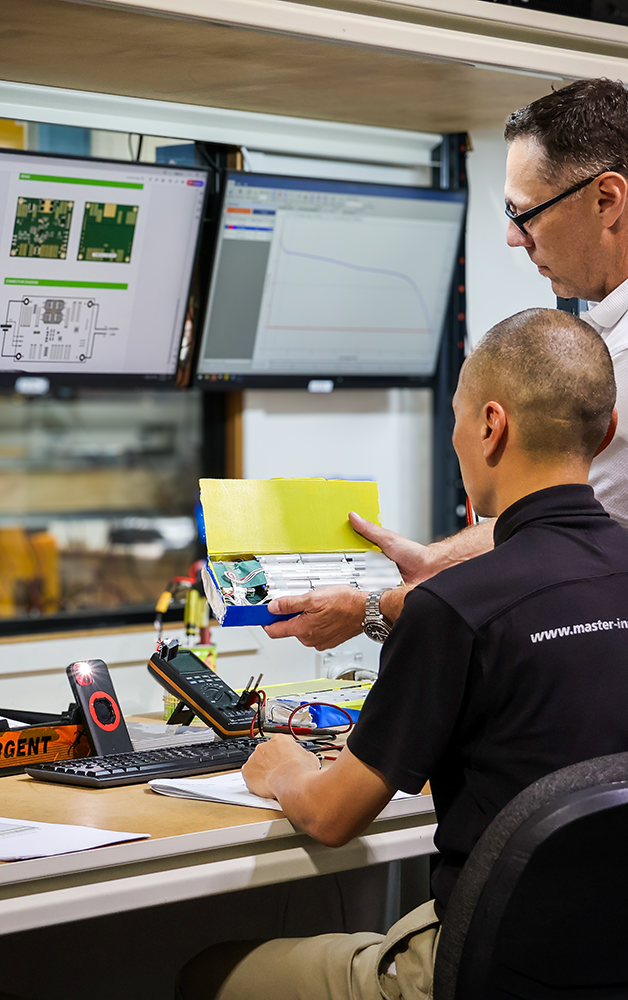 A battery cell is only one part of a power system.
For demanding applications, performance can depend on the Battery Management System, electronics, communications, charging architecture, thermal management, mechanical design and integration with the wider platform.
The engineering challenge is understanding how all of those elements need to work together for a specific application.
That is also why MI Battery Engineering doesn't advocate for one particular chemistry or technology.
“You can’t change the laws of physics and chemistry. Some things are better for some jobs and some things are better for other jobs.”
The role of the engineer is to understand those differences and apply the right technology to the requirement.
For Mark, that is ultimately where the value lies: “My job is to put it into a real-world application.”
Knowledge develops by doing
There is another dimension to maintaining capability locally.
Engineering knowledge doesn't develop in isolation. It develops through designing, building, testing and improving real systems.
When engineering and manufacturing remain connected, teams see how a design behaves in production. They understand component availability, assembly, tolerances, serviceability and quality. Testing creates further knowledge about how technologies perform under different loads and operating conditions.
And when something needs to change, that knowledge is accessible.
As Mark explains: “If you offshore your manufacturing, you ultimately lose the capability to do it yourself. You don't develop that infrastructure.”
For critical applications, that becomes particularly important over the life of the system.
If a component becomes obsolete, can an alternative be qualified? If requirements change, can the system be modified? If new technology becomes available, can it be evaluated and integrated? If something fails, is the expertise available locally to investigate it?
Sovereign capability is therefore not only about supply security. It is also about capability security.
Sometimes local manufacturing is the engineering outcome 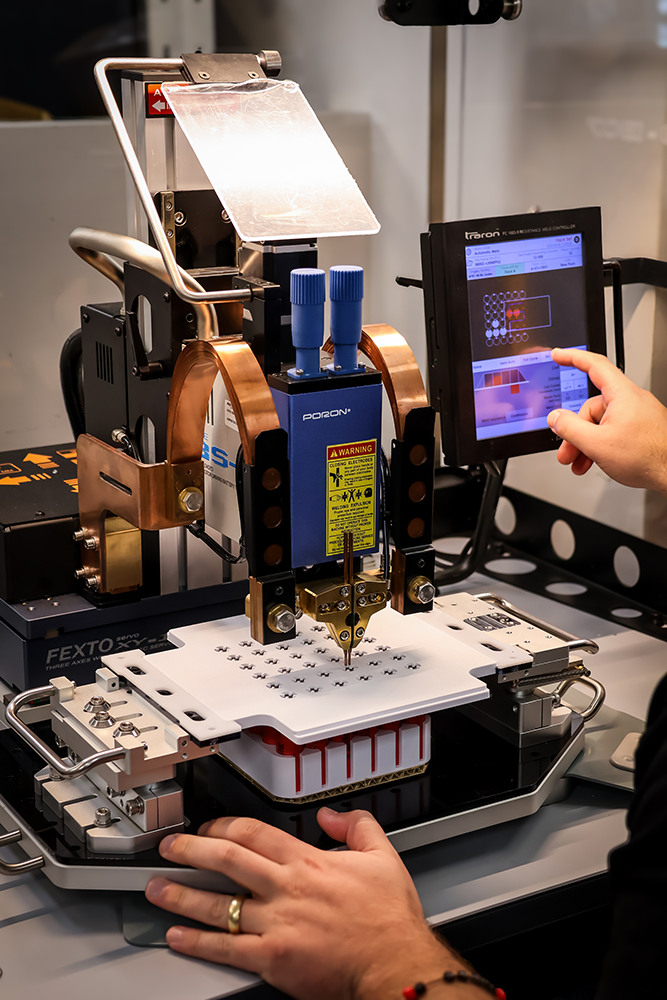
One mining project started with a very different intention.
The customer came to MI Battery Engineering with an imported battery they wanted to use in a mining vehicle. It was a capable product and, commercially, it looked like a sensible starting point.
Then the engineering began.
First, the BMS needed to change so the battery could communicate properly with the vehicle. Charging control had to be integrated. Then came the operating environment: heat required a different approach to cooling, while vibration, dust and salt exposure placed further demands on the enclosure and mechanical design.
With each requirement, the battery moved further away from the product the customer had originally brought to MI.
Mark remembers reaching the point where the team looked at what remained. “We changed so much that there wasn’t a lot of the original battery left.”
The customer came to much the same conclusion. “Let’s just make it here.”
That decision hadn't been the objective at the beginning of the project. It emerged through the engineering process.
By understanding what the battery actually needed to do, how it needed to communicate, charge, manage heat and withstand the mining environment, the value had shifted from the original product to the engineering around it.
In this case, local manufacturing wasn't the starting point but it was the engineering outcome.
Global technology. Australian capability.
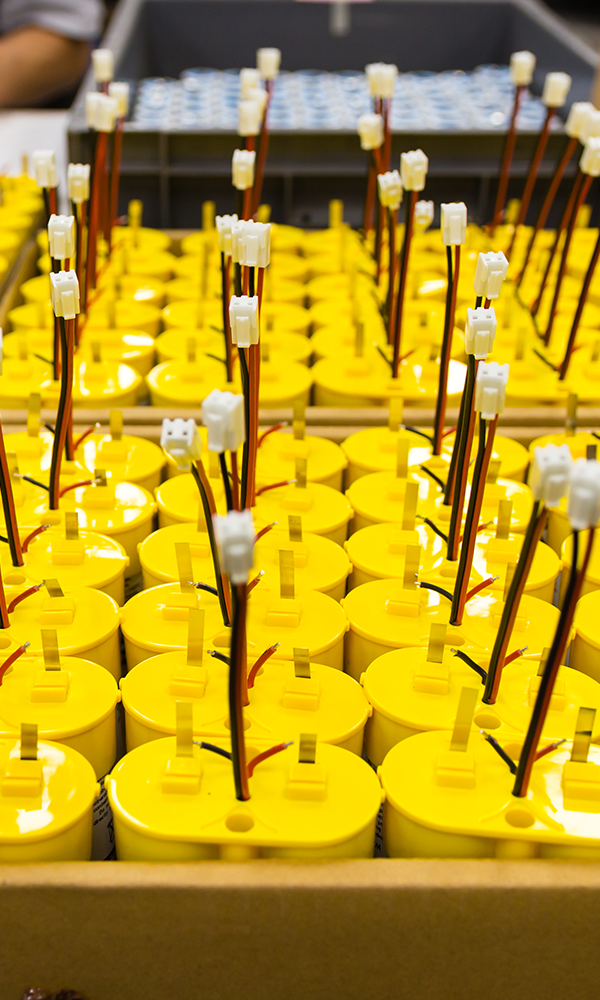 For MI Battery Engineering, sovereign capability does not mean every cell, semiconductor or component has to originate in Australia.
It means being deliberate about the capabilities we retain here.
Application engineering. System design and integration. BMS development. Testing and validation. Manufacturing. Failure analysis. Technical knowledge. Through-life support and sustainment.
Australia can draw on the best battery technologies available globally while retaining the expertise required to turn them into power solutions for critical Australian applications.
Source globally where it makes sense. Engineer, test and manufacture locally where the capability matters. And retain the knowledge to understand, modify and support the system throughout its operating life.
Because sovereign capability isn't only about where something was made.
It's about whether we have the capability to understand it, engineer it and support it here when it matters.
About Mark Beamish:
Mark Beamish leads MI Battery Engineering’s Perth operation. With decades of experience across battery engineering, manufacturing and industrial power applications, Mark works with customers and engineering teams to develop power solutions for demanding and critical operating environments.